


Investigative Interviewing Psychology: How Research Prevents Wrongful Convictions

Investigative interviewing psychology applies research-based techniques to gather accurate witness statements in criminal cases. Studies show 69% of wrongful convictions involve eyewitness errors, often from counterproductive interview methods. Psychologists use evidence-based approaches like open-ended questions and context reinstatement to help law enforcement collect reliable information while preventing memory distortion.
A shirt color. A peculiar scar. A half-remembered license plate number. Any one of these details can turn a dead-end investigation into an open-and-shut case. Detectives start mining memories for these little golden nuggets in the earliest and arguably most important part of any criminal investigation: interviewing witnesses and victims.


Unfortunately, though, mistakes can happen in interviews. It happens all the time. And often with life-ending consequences.
According to the Innocence Project, a non-profit focused on holding the criminal justice system accountable for its failings, about 400 convictions to date have been overturned by DNA evidence. 69% of those wrongful convictions were the result of eyewitness mistakes, inaccurate memories gathered during interviews, and the acceptance of these as truth during court proceedings.
These startling statistics beg the question: how can police forces, lawyers, insurance companies, and the criminal justice system as a whole better separate fact from fiction?
According to Professor and experimental legal psychologist Dana Hirn Mueller of Concordia University, St. Paul's Department of Psychology and Family Science, the answer is two-fold. She says there needs to be more research about interview techniques and more communication about that research outside of the academic arena.
"One thing that I noticed as I was coming up through graduate school is that we do research in our ivory tower," she said in an interview with CareersInPsychology.org. "This means that it doesn't often reach the practitioners for whom this research may actually be of benefit."
But what does a psychologically sound, science-backed investigative interview actually look like? And more to Professor Hirn Mueller's point, do the nation's law enforcement agencies know how to conduct such interviews? If not, how should law enforcement officials and psychology researchers bridge the gap?
Table of Contents
The Science Behind Accurate Memory Recall
Crimes are unexpected, happen fast, and often overwhelm the senses. As such, recalling details about a crime isn't always straightforward. According to Professor Hirn Mueller, a productive investigative interviewer keeps this in mind and acts accordingly.
"When I talk with students about this, I try to get them to think about what would impact their recall in particular," she says. "So if you have just witnessed, for example, a car accident, what might make you more likely to remember details of it? What might make you less likely to remember details?"
Professor Hirn Mueller and her colleagues explored these questions in a 2015 paper published in the peer-reviewed journal Psychology, Public Policy, and Law. The study starts off by introducing readers to some investigative interviewing best practices. Each one comes backed by years of psychological research and is recommended by the National Institute of Justice (NIJ).
The Loftus and Palmer Experiment: How Words Shape Memory
Perhaps one of the most dangerous counterproductive interview techniques is asking leading questions. A 1974 study on memory, known as the Loftus and Palmer Experiment, demonstrates why.
In the experiment, participants were shown footage of two cars getting in a wreck. Some participants were asked, "About how fast were the cars going when they smashed into each other?" Others were asked the same question, except the word "smashed" was replaced with hit, bumped, or collided.
A week later, participants were asked if they remembered seeing any broken glass at the scene of the accident. Participants who were asked the "smashed" version of the question were much more likely to say yes, even though no broken glass was present.
This goes to show that a single suggestive word can alter a witness's memory recall. So even if detectives or other interviewers don't intend to ask leading questions, when they do, they can make investigative interviews fertile soil for misinformation, which unintentionally leads to dishonest testimonies and false confessions that end lives.
Productive vs. Counterproductive Interview Techniques
Professor Hirn Mueller's research focuses on productive interview practices recommended by the NIJ. The measures focus on:
- Asking open-ended questions that don't suggest specific answers
- Utilizing context reinstatement to jog witnesses' memories
- Communicating expectations about the level of detail interviewees should give
- Building positive rapport with witnesses and victims
- Facilitating nonverbal response options like drawing
Together, these techniques make practical and theoretical sense. They discourage witnesses from answering questions about details they didn't notice, encourage accurate recall, and generally put interviewees at ease with a sometimes painful, emotional process.
But the purpose of Professor Hirn Mueller and her colleagues' research wasn't to simply collect research-based guidelines about investigative interviewing. It was, in part, to determine how many law enforcement officers follow them and how often they use them in relation to counterproductive interview tactics.
The responses were, at best, mixed.
Comparison: Evidence-Based vs. Counterproductive Techniques
| Productive Techniques | Effect on Accuracy | Counterproductive Techniques | Risk to Investigation |
|---|---|---|---|
| Open-ended questions ("Tell me what you saw") | Encourages detailed, unfiltered recall | Yes/no questions ("Was the car red?") | Limits responses, may miss critical details |
| Context reinstatement (recreating the scene mentally) | Improves memory retrieval by 35% | Rushing through questions quickly | Prevents thorough memory processing |
| Building positive rapport | Reduces stress, improves cooperation | Creating negative, confrontational atmosphere | Witness becomes defensive, less helpful |
| Allowing pauses for recall | Gives time for accurate retrieval | Multiple complex questions at once | Overwhelms witness, clouds memory |
| Neutral, non-leading language | Prevents memory contamination | Leading questions ("The car was speeding, right?") | Distorts memory, creates false details |
The Prevalence of Counterproductive Practices
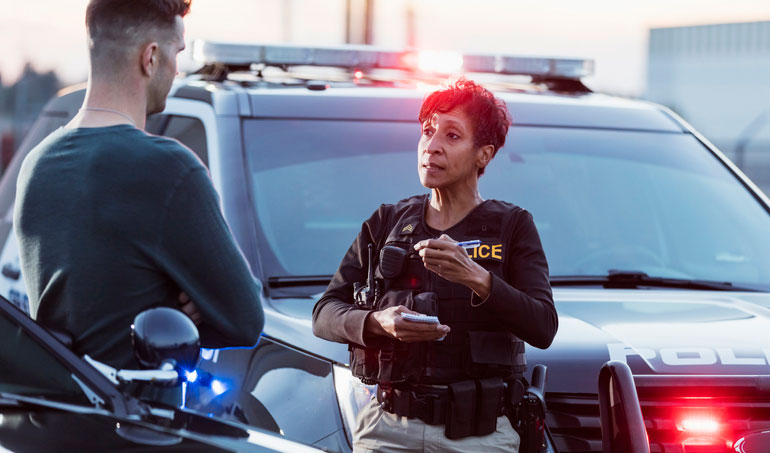
Professor Hirn Mueller and her colleagues contacted an astounding 1,682 law enforcement departments across all 50 states. 271 individual officers consented to partaking in their electronic survey. 59 officers entered only personal demographic data or nothing at all, resulting in 212 participants.
Not every participant answered every question, but the researchers asked them to identify interview techniques in short video segments (some were recommended techniques while others were counterproductive), report how often they used each technique, rate the effectiveness of each technique, report how many hours and what kind of training they received, and communicate if they were aware of research-based interview guidelines as provided by the NIJ.
"Encouragingly," the researchers write, "out of those investigators who responded, most demonstrated a reasonably good understanding of and distinction between productive techniques and counterproductive techniques."
Professor Hirn Mueller and her fellow researchers also note that participants generally rated productive interview techniques as better at "eliciting both accurate and plentiful information compared with counterproductive techniques."
Despite this fact, participants reported using counterproductive interview techniques in 42% of their interviews. To highlight a couple, 71.4% said they used yes/no questions, and 32.1% reported building negative rapport with interviewees. Many officers who use these techniques say they do so because, like recommended techniques, they elicit accurate and plentiful information.

However, the intro of Professor Hirn Mueller's paper cites multiple studies that highlight why these counterproductive techniques are, in fact, counterproductive (they confuse witnesses, alter their memories, encourage limited responses, etc.). So even though there's plenty of scientific data out there about why officers should avoid certain interview techniques, those techniques are still being used to the detriment of countless innocent people and victims.
Therein lies the driving force behind Professor Hirn Mueller's work and passion for psychology: making academic research more practical and accessible to people who can actually use it.
Bridging Research and Practice in Criminal Justice
"What typically happens is we do our research," Professor Hirn Mueller says, "and we present it at a conference that's attended primarily by legal psychology researchers. Or, we publish in a peer-reviewed journal that's primarily only consumed by other legal psychology researchers."
That's the insular cycle Professor Hirn Mueller wants to break with her practically-minded approach to psychology, an approach that students pursuing any level of psychology degree can find purpose in.
"One thing that I try to do in my research, or at least to be mindful of, is to bridge that gap between research and practice," she says. "In other words, how can we take what we learn in our research and help to apply that in actual practice?"
In keeping with this goal, Professor Hirn Mueller and her colleagues end their paper with a discussion about how they can cooperate with law enforcement agencies to make effective, scientific interview practices more common.
Four Strategies to Improve Interview Practices
Ensure the distribution of the NIJ guidelines. In their research, Professor Hirn Mueller and her colleagues discovered that only 2.3% of participants reported both receiving and being mandated to follow these guidelines. This represents a massive gap between available research and practical application in the field.
Make interview training more central to the police academy curriculum. On average, participants in this study only received about five hours of interview training during their police academy education. Compare this to the hundreds of hours spent on physical training, weapons handling, and other skills.
Implement continuous interview supervision and feedback. Even when law enforcement officers receive adequate training, they may need help avoiding counterproductive techniques throughout their long, varied, and often intense careers. Regular review and feedback sessions could help maintain best practices.
Distribute additional research and information. Along with NIJ guidelines, up-to-date research should be distributed, discussed, and put to use amongst law enforcement agencies. Ideally, relevant statistics would be shared by trusted sources within the law enforcement community itself instead of coming from some far-flung ivory tower.
When these things happen, fewer innocent people may have their lives ruined by court rulings based on inaccurate yet convenient information. Victims can get closure. Justice can be justice, fueled not by emotion and fallible instincts, but by research, data, and uncompromised truth.
Career Pathways in Investigative Interviewing Psychology
This exciting union of academia and applied psychology doesn't end with the criminal justice system. For students interested in pursuing careers at the intersection of psychology and law enforcement, several career pathways exist.
Forensic Psychologist
Forensic psychologists work directly with law enforcement, legal professionals, and court systems to apply psychological principles to legal matters. They conduct evaluations, provide expert testimony, and help develop evidence-based investigative techniques.
According to the U.S. Bureau of Labor Statistics, psychologists earn a median annual wage of $92,740. Those specializing in forensic psychology often work for government agencies, private consulting firms, or academic institutions.
Criminal Psychologist
Criminal psychologists study the behaviors, thoughts, and motivations of criminals. They develop profiles, assist with interrogations, and train law enforcement in psychological principles. Many work for federal agencies like the FBI or state-level law enforcement organizations.
Legal Psychology Researcher
Researchers like Professor Hirn Mueller conduct studies on memory, eyewitness testimony, jury decision-making, and interview techniques. They typically work in university settings, publishing research and training the next generation of psychologists while consulting with criminal justice agencies.
Victim Advocate and Crisis Counselor
Professionals in this role provide psychological support to crime victims and witnesses, often helping them navigate the interview process and court proceedings. They apply trauma-informed interviewing techniques and help witnesses cope with the emotional impact of giving testimony.
Police Psychology Consultant
Police psychologists work with law enforcement agencies to improve officer training, develop better investigative procedures, and provide psychological services to officers dealing with job stress. They bridge the gap between psychological research and law enforcement practice.
Education and Training Requirements
Breaking into investigative interviewing psychology requires a solid educational foundation in psychology with specialized training in forensic or legal psychology.
Bachelor's Degree (4 years)
Start with a bachelor's degree in psychology, criminal justice, or a related field. Focus on courses in:
- Research methods and statistics
- Cognitive psychology (memory, perception)
- Social psychology
- Abnormal psychology
- Introduction to forensic psychology
During your undergraduate years, seek research opportunities and internships with law enforcement agencies, victim advocacy organizations, or psychology research labs.
Master's Degree (2-3 years)
A master's degree in forensic psychology, clinical psychology, or legal psychology opens doors to entry-level positions. Look for programs that offer:
- Coursework in forensic assessment and interviewing techniques
- Practicum experiences with criminal justice agencies
- Research opportunities in eyewitness testimony or memory
- Training in evidence-based practices
Doctoral Degree (4-7 years)
For research positions, expert witness work, or senior consulting roles, a PhD or PsyD in psychology with a forensic specialization is typically required. Doctoral programs include:
- Advanced research training and dissertation
- Clinical training and supervised practice hours
- Specialized coursework in legal psychology
- Internships with courts, prisons, or law enforcement
Licensure and Certification
To practice as a psychologist in most states, you'll need:
- State licensure (typically requires a doctoral degree and supervised hours)
- Passing scores on the EPPP (Examination for Professional Practice in Psychology)
- Board certification from the American Board of Forensic Psychology (optional but valuable)
Law enforcement consultants may also benefit from specialized training through organizations like the International Association of Chiefs of Police or the FBI National Academy.
Frequently Asked Questions
What is investigative interviewing in psychology?
Investigative interviewing in psychology refers to evidence-based techniques used to gather accurate information from witnesses, victims, and suspects in criminal investigations. These techniques, developed through psychological research, help prevent memory distortion and false confessions while improving the quality of information collected.
What degree do I need to work in forensic psychology?
Most forensic psychology positions require at least a master's degree in forensic psychology, clinical psychology, or a related field. Research positions, private practice, and expert witness work typically require a doctoral degree (PhD or PsyD) and state licensure.
How much do forensic psychologists earn?
According to the U.S. Bureau of Labor Statistics, psychologists earn a median annual wage of $92,740. Forensic psychologists working for federal agencies or in private consulting may earn significantly more, with experienced professionals earning over $130,000 annually.
What's the difference between interrogation and investigative interviewing?
Interrogation typically involves confrontational tactics aimed at eliciting a confession from a suspect. Investigative interviewing focuses on gathering accurate information through non-coercive, evidence-based techniques that minimize the risk of false confessions or contaminated memories. The latter approach is supported by decades of psychological research.
How can I learn these interviewing techniques?
You can learn investigative interviewing techniques through graduate programs in forensic psychology, specialized training from organizations like the International Association of Interviewers, or continuing education courses offered by professional psychology associations. Many law enforcement agencies also offer training based on NIJ guidelines.
What careers use investigative interviewing research?
Several careers apply investigative interviewing research, including forensic psychologists, criminal psychologists, FBI behavioral analysts, victim advocates, police trainers, legal psychology researchers, and private investigators. Even social workers and therapists use these principles when interviewing clients about traumatic events.
Are there certifications for investigative interviewing?
Yes, several organizations offer certifications in forensic interviewing and investigative techniques. The American Board of Forensic Psychology offers board certification for qualified psychologists. Additionally, specialized training programs through the National Children's Advocacy Center and similar organizations provide certification in forensic interviewing techniques.
Key Takeaways
- Memory recall is fragile and easily distorted by suggestive questioning, with a single word able to alter witness testimony and create false memories.
- Research-based interviewing techniques, such as open-ended questions and context reinstatement, dramatically improve accuracy, yet 42% of law enforcement interviews still use counterproductive methods.
- 69% of DNA exoneration cases involve eyewitness errors, highlighting the critical need for evidence-based interview training in criminal justice.
- Psychology research bridges the gap between academia and practice, offering law enforcement tools to prevent wrongful convictions and secure accurate information.
- Multiple career paths exist at the intersection of psychology and criminal justice, including forensic psychology, legal research, victim advocacy, and police consultation.
Ready to Make a Difference in Criminal Justice?
The field of investigative interviewing psychology offers a unique opportunity to apply psychological science where it matters most: ensuring justice is served fairly and accurately. Whether you're passionate about research, direct practice with law enforcement, or supporting crime victims, this career path combines intellectual rigor with real-world impact.
Explore psychology degree programs or learn more about applied psychology careers to start your journey.
"One thing that I try to convey is that because psychology is such a wide-ranging field, it really has facets in virtually every area of our everyday lives," Professor Hirn Mueller says. "I really try to foster the idea within our students that even if they're not interested in actually pursuing a career in psychology, that it can impact not only their professional lives but their personal lives, as well."
At every level, more psychological research on memory and more discussion of it stand to improve how our world operates and how the people in it understand each other and themselves. This prospect can fuel students' research and help them launch rewarding, people-centered careers in psychology.
Ready to Start Your Psychology Career?
Explore accredited psychology programs that match your career goals and prepare you for licensure in your state.
2024 US Bureau of Labor Statistics salary figures and job growth projections for Clinical and Counseling Psychologists, Industrial-Organizational Psychologists, School Psychologists, Psychologists-All Other; Psychiatric Techs; Psychiatrists; Substance Abuse, Behavioral Health and Mental Health Counselors; Marriage & Family Therapists; and Social Workers are based on state and national data, not school-specific information. Conditions in your area may vary. Data accessed October 2025.
